

Handwoven rugs are crafted by skilled artisans, not factories. Every knot and weave reflects time, expertise, and attention to detail. This human craftsmanship creates depth, texture, and character that machine made rugs simply cannot replicate.
Unlike mass-produced synthetic rugs, handwoven rugs are typically made from natural fibers like wool, cotton, or silk. These materials are more durable, breathable, and age beautifully over time. A quality handwoven rug can last decades even generations while most machine-made rugs need replacement within a few years.
There is also a clear difference in feel and appearance. Handwoven rugs have a rich, dimensional texture that enhances a room’s warmth and elegance. Machine-made rugs often look flat and uniform.
Beyond aesthetics, choosing handwoven supports traditional craftsmanship and sustainable production. It’s not just a décor decision it’s an investment in quality, heritage, and long-term value.
In short: machine-made rugs are temporary solutions. Handwoven rugs are lasting statements.
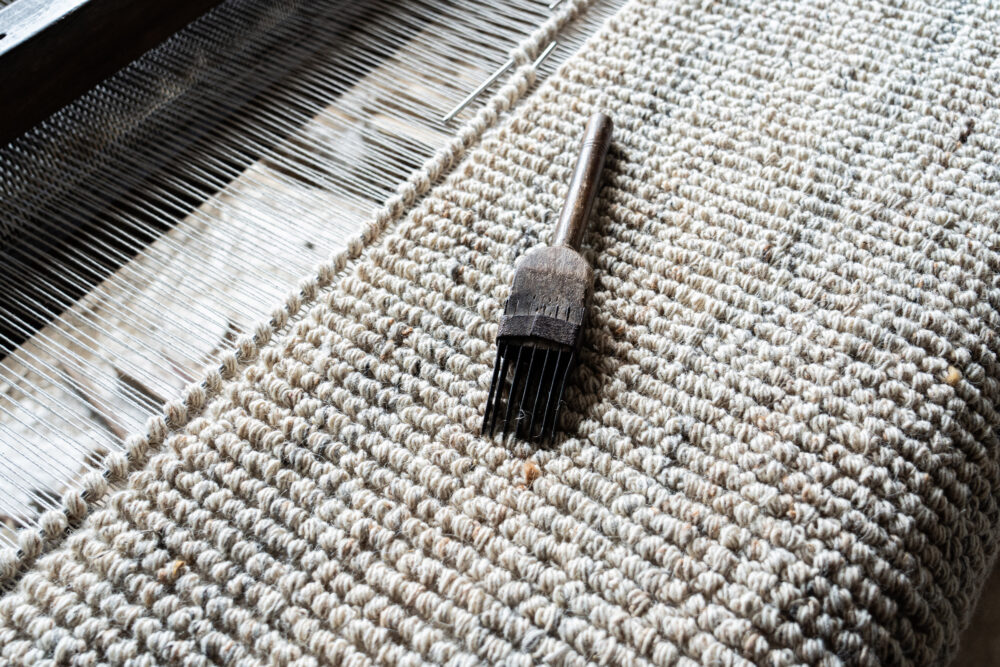
Craftsmanship: Human Skill vs. Industrial Automation
A handwoven rug is created on a loom by skilled artisans who interlace yarns manually knot by knot or weft by weft. This process can take weeks or even months depending on size and complexity.
Conclusion
Handwoven rugs are not merely floor coverings they are enduring design investments defined by craftsmanship, material integrity, and cultural heritage. While machine-made rugs offer convenience and affordability, they cannot compete in durability, sustainability, or aesthetic richness.
For homeowners and design professionals who prioritize quality, authenticity, and long-term value, handwoven rugs remain the definitive choice.
In interiors where excellence matters, craftsmanship always prevails.